
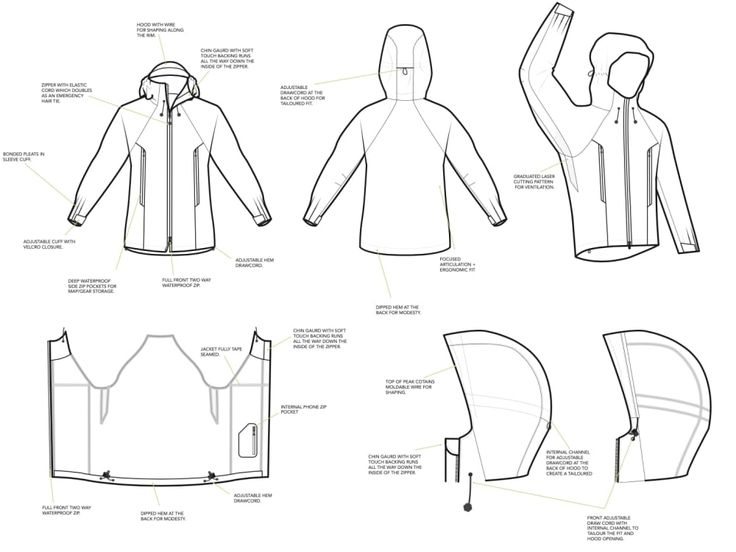
A custom waterproof jacket can look complete in a sketch while still leaving the factory to guess at the details that determine fit, water resistance, and cost. A useful tech pack removes those guesses before sampling. It does not have to be elaborate, but it should give the pattern maker, material team, sample room, and quality team the same version of the product.
This checklist is for brands preparing a technical shell, private label rain jacket, or similar OEM program. It is especially useful when comparing manufacturers: send the same brief to each supplier and ask them to identify assumptions rather than silently filling gaps.
1. Define the jacket's job
Start with the wearer, activity, weather exposure, and intended selling market. A lightweight commuter rain shell and a climbing hardshell may both need a hood and taped seams, yet they have different movement, pocket, reinforcement, and ventilation priorities. State whether the jacket is intended as a standalone shell or to fit over insulation. Include reference images, but label which features are requirements and which are only inspiration.
Specify the target size range, fit model, and base size. If you already have a successful garment, provide its measurement chart and identify where the new jacket should differ. The pattern and template development page shows the kind of pattern work that follows a clear brief.
2. Specify fabric and membrane construction
Record the intended fabric construction, face texture, weight range, stretch direction, color, and lining or backer preference. If you have a preferred waterproof breathable laminate, identify the exact supplier and approved material code. Ask the factory to flag substitutions in writing, including any change to hand feel, weight, lead time, or price.
Brands looking for a technical waterproof and breathable outdoor jacket manufacturer should document the target fabric performance and test method rather than rely on a broad category label. If a particular laminate is required, provide its approved material code and confirm supply availability. Otherwise, state the construction and performance you need and ask the manufacturer to document proposed alternatives.
3. Map every potential water entry point
A waterproof laminate alone does not define the finished jacket. Mark all seams that require tape, and note areas where multiple layers converge: hood base, shoulders, underarms, pockets, and hem. Draw zipper locations and specify whether each closure uses a flap, a water-resistant zipper, or another construction. The term "waterproof zipper" can mean different things, so include a reference sample or component specification and the intended test method.
Include a close-up diagram for cuff adjustment, hood brim, drawcord exits, vents, and pocket openings. If a logo is embroidered through a shell panel, show how the inside will be treated. Our taped seam construction overview is a useful reference when reviewing seam placement with a supplier.
4. Give the sample room measurable instructions
A strong tech pack includes front, back, and detail drawings; a bill of materials; a measurement chart with tolerances; stitch and seam notes; artwork placement; and labels or packaging requirements. Record the version number and date on every revised sheet. A comment such as "make the hood better" is hard to act on; "increase front opening coverage by 15 mm without changing peripheral visibility" gives the sample room a specific change to evaluate.
For the first prototype, identify decisions still open. These might be two hood shapes, alternate cuff closures, or a choice between pocket constructions. Keep those options separate from approved production specifications. The product sketch and tech pack development page outlines the handoff from concept to technical instructions.
5. Agree on how the sample will be judged
Ask for a sample review sheet before the first garment is made. List fit checkpoints, movement tests, appearance standards, seam tape inspection points, and any water resistance test you plan to use. Note who supplies the test method and who approves the result. A factory sample that looks good on a mannequin can still fail when a wearer reaches overhead or when a hood turns with the head.
Photograph each revision from the same angles, attach the updated measurement chart, and mark every issue as accepted, changed, or pending. This record becomes the basis for the pre-production sample and bulk inspection. The factory quality control page provides more context for organizing those checks.
6. Send a quote packet that can be priced
Before requesting a quote, include expected order quantity by color and size, delivery destination, target calendar, packaging requirements, and whether the factory is sourcing materials or working with nominated suppliers. If a branded membrane is mandatory, identify its confirmed source. Ask the manufacturer to separate sample charges, material assumptions, and bulk pricing so revisions do not become a surprise later.
A clear tech pack will not remove every round of development. It will make each round more useful: both sides can see what changed, why it changed, and what remains to be approved. Outdoor Sky can review a sketch, reference sample, or existing tech pack to identify the construction details needed for an OEM discussion.
Discuss your jacket program
Send your sketch, reference sample, or current tech pack with quantity, size range, and target delivery window.
Request a Quote